"Be still and know that I am God"
Psalm 46

Showing posts with label Laurence Freeman OSB. Show all posts

The Contemplative Parish

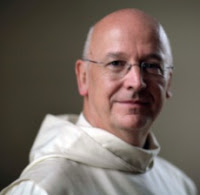
by Fr. Laurence Freeman O.S.B.


"One of John Main’s seminal insights was that 'Meditation creates community'. This is an important clue to the regeneration of the parish in the life of Christianity. We have come to think that community is created exclusively by doing things together. Action, whether it is a social evening, running parish organizations, administration or work for a political cause, can bring people together in the consciousness of a common cause and selfless work. If the contemplative consciousness is lacking from this work, however, it runs a greater risk, inherent in all excessively Martha-driven activity, of becoming both superficial and egocentric...  


Who was it who said he believed passionately in progress but it was change he could not handle? If the ancient institution of the parish is to progress and so expand its range of relevance for future generations it will need to initiate change at a level that defines Christianity in its third millennium as a whole. There is no progress without change and no serious change without radical revaluation of purpose and direction. What is the parish for? What direction should it be taking? These are questions that have acquired an increasing urgency in our time, if not a desperate urgency. They do not arise merely from organizational issues in a church beset by clerical shortages, the loss of authority and respect due to sexual scandals, dwindling congregations and financial problems. The parish represents an important way Christian faith is lived in the modern world.

Parishes fulfill many functions, of course. And there are many different kinds of parishes. Yet, historically, as a family based religion, Christianity has, in most of its forms, developed some kind of parish structure as a defining sign of its witness to the world of its inner life and faith. The parish, in diverse ways, forms a physical center that concentrates on the religious needs and spiritual life principally of people who live within an easy drive of its congregational center.

Multiple parishes under a single leadership offer a different model, but this development is generally a desperate attempt just to keep things going as they have been done so far, rather than initiate change through a revaluation of the meaning of the parish. The closing of inner city parishes in many cities is necessitated by the relocation to suburban security of a certain social class that constituted the parish community exclusively for many generations. In some parts of the world, these new housing developments offer the opportunity for new, more vibrant parishes which nevertheless remain closely, over-cautiously bound to old models of parochial life that have not looked at themselves and asked what they are really for in the modern world.

At its worst, parish life is moribund, resistant to change, or plain boring. The best parishes often suffer from also being hyperactive, breathlessly preoccupied with external projects and measurable results. The contemplative parish, as I would like to describe the viable and attractive parish of the future, would find the middle way. If the term 'contemplative parish' seems to be a silly oxymoron, it will be necessary to explain it.

In his teaching at the house of Martha and Mary (Lk 10:38-42) Jesus gives the first defense of the contemplative life in the Christian tradition against the oft-leveled charge that the solitary, silent contemplative is selfish and insensitive to the needs of the world. Jesus not only affirms Mary's contemplative work but does so emphatically: 'She has chosen the better part.' Yet, he does not condemn Martha's work, only her distractedness. 'You are fussing and fretting about so many things.' Then he adds, without defining what the thing is, that 'only one thing is necessary'. Could we say that the one thing necessary is to restore the friendship between the sisters in their household? Martha and Mary are not merely two personality types with different scores on the Enneagram. Certainly, human beings fall into different types, some being the extroverted, fixers and problem-solvers of any organization; others the quieter types who are content just to sit in a corner and listen. Jesus is saying more than that. Martha and Mary represent the two sides of the human soul which need to be friends and to live in an integrated and wholesome way together in the house of the self. They are the two sides of a parish as well. If a parish, as most of us do as individuals, falls into an excessive activism and neglects the value of the contemplative, it runs the same danger as Martha of collapsing into rage and dysfunctional behavior. When Martha, at the beginning of the story, complains to Jesus about Mary and tells him to go and tell Mary to give her a hand, is she not the only disciple in the gospel who orders him what to do? When Martha falls out of friendship with Mary, the wholeness and peace of the self is lost and with it goes reverence for the presence of God.

A 'contemplative parish', then, means a local Christian community which has learned to integrate and balance the active and contemplative aspects of the gospel life. It does not mean turning the parish into a surrogate monastery. As my monastic community at Cockfosters in London also runs a suburban parish, I am well aware that a parish and a monastery are different things. At Christ the King, we have a vibrant parish with regular sacramental celebrations and a diverse range of parishioner-led ministries. There is also a spirituality centre offering a stimulating program of events and training in spiritual direction, a meditation centre with introductory and ongoing groups, a guest house,  the divine office sung in the parish/monastic church at the usual hours with lay participation and, each morning and evening before the Office, a half-hour of silent meditation for monks, guests and parishioners. Because of the presence of the monks, the contemplative dimension of the gospel is more readily shared with the parish and enriched by it. But there is no reason that even in a parish with a single overworked pastor this dimension could not be realized and integrated both for his benefit and for that of the parishioners. We can see how this could be done if we look at some different aspects of the parish. We can then imagine how the parish might progressively change in the next era of the church's history when the changes that have been long waiting to happen finally arrive.

SACRAMENTAL CENTRE
In the catholic tradition, parishes are seen as centres of sacramental life but they are meant to be more than the sacramental production-lines they often become. Pastors can exhaust themselves providing sacramental service and then feel perplexed or hurt when people complain that the liturgy is deadly and people don't seem to want to get married or have their children baptized, as in the past. The more popular parishes, often at the evangelical end of the denominational spectrum, tend to be those with a stronger emphasis on the celebration of the Word, great music, family involvement and community sharing. I attended an American Dutch Reform Sunday service recently which did all this better than I had ever seen done before. A good crowd gathered beforehand to listen to a talk on meditation. After the readings, moving hymn-singing and an intelligent, sincere sermon, I was ready for Eucharist. But the table that stood in front of the stage and pulpit remained unused when we moved to coffee. The feeling of incompleteness was similar to that in a Catholic church where the sacramental Eucharist almost wholly overshadows the liturgy of the Word.

Worshiping in both Word and Sacrament in ways that are both beautiful and participatory is one of the great challenges for the parish of the future. It can be achieved when the power of integration arises from the contemplative experience — worship in spirit and truth. In any parish community today, those practicing contemplative prayer in a regular, disciplined way may be a small minority. Yet their influence will be felt at every level of the community's life including the decisions taken about the liturgy. Even those who are not regular meditators frequently complain about the speed, noisiness and lack of times of silence in the liturgy. Younger people seem especially hungry for the contemplative dimension of the liturgy.

The Council reminded us of it when its document on liturgy said that the purpose of the liturgy is precisely to cultivate a 'contemplative orientation' in the people of God. In some parishes this may lead to a regular scheduled contemplative mass. In others, the existing liturgies will be influenced by the recognition in the community as a whole of the contemplative dimension of prayer.

PLACE OF COMMUNITY
One of John Main's seminal insights was that 'meditation creates community'. This is an important clue to the regeneration of the parish in the life of Christianity. We have come to think that community is created exclusively by doing things together. Action, whether it is a social evening, running parish organizations, administration or work for a political cause, can bring people together in the consciousness of a common cause and selfless work. If the contemplative consciousness is lacking from this work, however, it runs a greater risk, inherent in all  excessively Martha-driven activity, of becoming both superficial and egocentric. Politics and competitiveness enter into all human activity. Contemplation does not eradicate the political ego, but it does make us more aware of its presence and reduces the level of self-delusion it is responsible for. The pettiness of parish-pump politics turns many people away from parish involvement who are genuinely seeking a way of service to others in community.

Naturally, this is true of all human activity and relationship that together create community. Among the early Christians it was a commonplace that the way you prayed determined the way you lived. Today we call this 'spirituality'. The level and quality of prayer determines the level from which our sense of meaning arises through daily experience as well as the quality of our relationships and self-knowledge. Community is vitally influenced by this. Religious community above all needs a contemplative spirit moving within it to ensure that its activity is continuously being checked against the standard of love and discipleship. We really believe in love and commit ourselves to discipleship only to the degree that we have an identity beyond the horizons of the ego. When we even barely glimpse the reality of St Paul's statement that 'I live no longer but Christ lives in me' our way of relating to other people is radically transformed.

A great discovery awaits us when we sit regularly with others in silence and then get up to work with them for the good of others. Silence is not an absence of the communication that we think exclusively creates community. It is the experience of communion at a level deeper than that of the words and gestures with which we normally communicate. Many secular organizations and committees begin their work or meetings with a period of silence knowing that this not only clarifies the minds of those present but somehow makes them better listeners to each other and more amicably disposed to accept differences without turning them into divisions. In a society so damaged by divorce, stress and loneliness many people look to the parish as a place of community and spiritual friendship. This is often expressed and shared by doing things together either in recreation or for the good of others in need. The capacity of that work to be truly spiritual, not just superficially social, will depend on the awareness in the community of the experienced contemplative dimension of both prayer and life.

EDUCATION
Parishes are places of worship and community but also of learning. In the past the learning was passive and consequently shallow. The congregation listened silently as the priest sermonized from a pulpit above them. If they were listening and dared to think for themselves and disagreed there was no forum for discussion. Most people today would find this form of spiritual education laughable or offensive.

Some parishes do run good adult education Courses, but the full potential of the parish as a community for ongoing religious and spiritual learning waits to be realized in the parish of the future. We will get there when the Church as a whole moves from preaching to teaching. To teach means firstly to listen to those learning and assess where they are in their quest for understanding and what they actually desire to learn. Most people today with a conscious desire to deepen their spiritual life and knowledge are looking for more than courses on the Catechism or the foundational dogma of Christianity. The hunger for truth that impels them perceives truth as what is personally discovered rather than delivered in a package. Religious education means more than being told what it is you have to believe if you are to call yourself a Christian.

Many are sadly ignorant of the Christian mystical tradition except in the devotional lives of the saints they have learned about as children. An enormous potential awaits the parish in becoming a centre for the teaching of the forgotten contemplative riches of the Church. The full teaching of this tradition will require the concerted resources of scholars and teachers beyond the confines of the parish. This need might stimulate the bishop to fulfill his role as spiritual teacher and coordinate the project through all his parishes using resources that may be available only at the diocesan or national level.

I recently visited a Buddhist centre in central London to meet a visiting rinpoche who was teaching for five consecutive days a group of several hundred students. This was but one part of a program extending over several years and demanding intense study of a foreign culture and philosophy. There are not a few Christians with as deep a thirst for the spiritual riches of the great masters of their own tradition. Even in seminaries, dogmatic theology dominates the curriculum. Yet it is in making friends with the great spiritual teachers of the church throughout history that our own spiritual journey is often stimulated to move from mere cerebral knowledge to contemplative experience, from mind to heart.

SPIRITUAL GROWTH
A parish, it is true, is not a meditation centre. Being family-based (though open to people in all walks of life to make community with it) the contemplative parish will embrace people at every stage of their spiritual journey. Usually, however, there is little movement spiritually from the early days of entry into the Community. In fact, the desire to grow spiritually, to mature in the faith and deepen one's prayer, is often viewed with suspicion rather than encouragement.  The priest often feels threatened and other parishioners make the offending member feel awkward or rebellious. Yet what is the purpose of the parish if not to be a place of spiritual growth and movement? What is the meaning of parish leadership if it is not to prod and encourage each of its members to be continuously growing? For some this might mean learning the basic theology of the sacraments or the Creed. For others it might mean leaving behind an exclusively devotional spirituality and moving through the night of the senses into contemplative prayer.

If the parish is seen primarily as a place of spiritual maintenance it will be trying to hang on to its members. Little energy will be left for sharing the faith with others outside the community. If, on the other hand, the parish is a place encouraging spiritual growth and exploration, new members will be attracted to it. The sad spectacle of churches trying to advertise themselves as a religious product of fading appeal will be replaced with the contemplative parish as an alluring sign of spiritual vigor and courage.

INTERFAITH DIALOGUE
Two great challenges offer the parish and the Church as a whole an opportunity for regeneration: the rediscovery and reappropriation of its contemplative tradition as a living practice among all its members and the encounter in deep dialogue with other faiths. These two are intimately linked. Since most of the religions we are called to be in dialogue with are contemplative rather than missionary or activist, it is necessary that the Christians involved in meeting them come from the contemplative level of their own faith.

Inter-religious dialogue (like inter-denominational ecumenism) thrives in a contemplative environment. Unity is then seen as an already existing reality rather than as something to be created. Friendship and humour replace competitiveness and pomposity. Parishes have a particular contribution to make to this dialogue of religions because in so many families where a child comes home announcing he is becoming a Buddhist and will stop going to church, the ensuing discussion around the kitchen table becomes a seminal form of dialogue.

The Archdiocese of New York recently distributed to  all its parishes an admirably written brochure with a brief, accurate description of the principal beliefs and practices of each of the main religions it shares the space of the city with. The first level of dialogue to which the contemplative parish contributes is the reduction of the abysmal ignorance that so many Christians have about other faiths and of the fear and hostility that proceed from ignorance. Some more evolved parishes may then go further and institute an interfaith centre that will work to create friendship with other local faiths in their places of worship. Silence will be a major element in the praying together that will enrich all who share in it.

Two simple things can be done to help develop a contemplative parish. The first is to actively encourage a weekly meditation group. However small this may be, it will offer a place for others to come and learn and to persevere. Its very existence raises consciousness about the contemplative dimension of the gospel in the parish as a whole. In many dioceses, such as Brisbane, in the Caribbean, Dublin, Montreal, or Mauritius, this encouragement from church leadership has led to a remarkable flowering of meditation groups and many graces to the parish and diocesan life. The second is the establishment of a meditation centre in the parish, such as at Dun Laoghaire in Dublin or at Cockfosters, London. This offers a place where regular morning and evening meditation periods are held near the main place of worship, but in an atmosphere dedicated to silence.

The contemplative parish is a place where a deeper and broader knowledge of Christ can be allowed to flourish. The fruits of this will benefit all within it and in contact with it. If contemplation, as Aquinas said, is only the 'simple enjoyment of the truth' what is to prevent this ideal from being realized in every parish?

Laurence Freeman


Eucharist and Contemplation

 by Fr. Laurence Freeman OSB

Silence as a liturgical experience, by contrast, draws the community closer together and unifies their attention so that together in mind and heart they can hear the word and share in the mystery.


THE EUCHARIST AND SILENCE
Laurence Freeman OSB
Lecture at The School of Prayer
Archdiocese of Melbourne
20th April 2005


According to ancient Catholic wisdom there are three liturgies: the liturgy of heaven, the liturgy of the altar and, between them, the liturgy of the heart. The fullness of liturgy must therefore partake of all three interpenetrating dimensions: the realms on each side of the valley of death and of the mystery of the deepest human interiority.

Speaking about silence in the Eucharist we are talking about the Law of White Spaces. A group of rabbinical students were once arguing about the meaning of a biblical text. They appealed to their teacher who told them to show him the page. “What do you see here?” he asked. “The words we are discussing,” they replied. “These black marks on the page,” the old rabbi said, “contain half the meaning of the passage. The other half is in the white spaces between the words.” This is the margin of silence around any page. It is also the necessary pause between breaths, the stillness between thoughts, the rest between bouts of activity.

The recent reminders in papal teaching to restore the experience of silence to the liturgy of the altar point us to respect this universal law. They also help us to recover the pleroma of liturgical worship in each of its three distinct but overlapping realms of earth, heaven and the heart. We need to; because for a growing number of people today the Eucharist is a ritual whose significance is and has long been hemorrhaging. There are those who have never felt its inspiration and consolation. For them it is in no way a communal sacramental ritual that gives meaning to life. Its affirmation of the transcendent meaning of ordinary human existence even in its most mundane and mortal passes them by entirely. It is not linked to the meaning of life’s joys, griefs, hopes and disappointments. It is not food for the journey of the daily slog. For many the Mass can seem strange and unwelcoming. In an age of a new evangelization we should remember the power of the liturgy to communicate the Gospel to nonbelievers. When they come to a business colleague’s funeral or to a friend’s wedding mass the way in which the Eucharist is celebrated may communicate something surprising and permanently valuable to them. It may present a face of Christianity they had never seen before and which leads them to recognize something they had previously ignored.

Then there are those who once upon a time felt the mystery and mysticism of the Eucharist but lost touch with it. Perhaps as their spirituality matured they went in search of the interiority it expresses – the inward grace of which it is an outward sign – and felt they could not find it in the church. For such people, discovering a contemplative way of prayer can reconnect them to their lost sacramental sensibility and bring them back to church. There are also those who persevere in regular Eucharistic worship, often for the sake of their children, or to keep up some link with the spiritual world, but they feel it depressingly fails to express itself satisfactorily in their Sunday worship. And finally there are those who despite all individual and ecclesial imperfections have the grace of seeing the mysterious and mystical efficacy of the Eucharist wherever and however it is celebrated.

Silence as a dimension of the Eucharist is valuable and necessary to each of these types of person. Before I go further in what may seem the non-existent and abstract subject of silence let me share with you what I recently heard during a retreat I was giving in Sydney. A pastoral assistant from a parish in New South Wales told me that the priest there has actually done what Pope John Paul II asked priests to do and what the Guidelines of the new edition of the General Instructions of the Roman Missal reinforce. He has restored liturgical silence to the worship of his parish. I was surprised, not at this per se, but by the degree. They have silences after the readings, five minutes after the homily and fifteen minutes at communion. I asked how the people responded and was told that nobody has walked out and many are expressing their approval. I don’t, however, want to reduce this subject to the number of minutes of silence – and for good reason.

There are many kinds of Eucharistic celebration and the discretion of the celebrant is crucial. A period of silence may now be observed has to be interpreted. But I think it is significant that an ordinary Sunday parish congregation can be introduced to this degree of silence and enjoy it. It may be as surprising to some as the fact that children respond well to meditation – times of silent prayer without words or images. They do it and they like to do it and they ask for more. In talking about the Eucharist and silence we are in fact considering the contemplative dimension of faith, as of lectio, worship and the whole of life. As Pope John Paul II said in Mane Nobiscum Domine, we need to progress from the experience of liturgical silence to the spirituality of silence – to life’s contemplative dimension. In other words, as the early church well understood, the way we pray is the way we live. People are searching for this contemplative dimension today as never before and when they come to church, to celebrate Eucharist they expect, and have a right, to find it.

Meister Eckart typically said that ‘there is nothing so much like God as silence.’ Mother Teresa, who insisted on the centrality of two hours of silent prayer for the life of her apostolic sisters, typically said that ‘silence is God speaking to us.’ Each of these sayings illustrates a way of understanding the meaning of silence. Why is God so like silence? Eckart doesn’t say God likes silence or likes silent worshippers but that God is like silence. St Benedict has two words we translate as silence: quies and silentium. Quies is quiet, physical silence, an absence of noise – not banging doors, not scraping chairs, not coughing or unwrapping sweet papers. It is the quies we expect good parents to train their children in, a physical self-restraint and modesty that respects the presence of other people. Quies makes the world habitable and civil. It is often grossly lacking in urban modern culture where muzac invades elevators and there is rarely a moment or place where we are not in range of manmade noise. There are now expensive headphones that people wear, not to listen to music but to block out noise. Silentium, however, is not an absence of noise but a state of mind and an attitude of consciousness turned towards others or to God. It is attention. When someone comes to see a priest or counselor to share a problem or grief, the priest knows that what he must above all give is his attention. There may not be a solution to the problem and most of our hopefully helpful words glide off the back of grief as failed platitudes. To listen deeply, to give oneself in the act of attention is in fact not to judge, or fix or condemn but to love. Seen this way there is indeed nothing so much like God as silence because God is love.

We will look at the sacrificial meaning of the Eucharist later and at how silence reveals it. Here I would like to connect the act of attention with the gift of self. Deconstructionist philosophers have left themselves little space for human value but they do conclude that the supremely human act that gives value and meaning to life is the gift of self. However they question if it is actually possible. There’s usually a condition or a demand when we give ourselves. We want recognition, a reward, gratitude or something in return. This invalidates the purity of the gift of self. The Christian would see the Incarnation as the divine gift of self and the life, death and resurrection of Jesus as this divine gift being manifested in his humanity. A perfect gift of self bestows on the receiver not the burden of debt but the capacity to give himself or herself in turn. This is what the Eucharist teaches and re-enacts and nourishes. In all self-giving - even when it is imperfect – we are struck silent with awe and reverence. How much more do we need silence in the Eucharist to be able to appreciate this perfect sacrifice of love?

Liturgy - like all ways of prayer - is essentially about attention. At the Eucharist we train our attention towards God through the gift of self that Jesus made historically and makes continuously through the Spirit both in our hearts and on the altar. Although our attention may wander, looking at new faces in the congregation or browsing the bulletin, the attention of Jesus directed to us never wavers and does not even condemn or dislike us for our distractedness. Though we are unfaithful, he remains faithful because he cannot betray himself. This, at least to the believer, is the inexpressible mystery of the Eucharist and the ultimately irresistible and sweet attraction of the real presence.

Silence is work, the work of loving attention and its fruit is a heart filled with thanksgiving. This connects Meister Eckart’s idea of silence with Mother Teresa’s. Silence which is like God as nothing else is also God speaking to us. When we pay attention to God we soon realize that God is paying attention to us. Indeed it is God’s attention to us that allows us to pay attention to God. It is God who strikes the first spark of good will in us, according to Cassian who debated with Augustine about free will. But then we have to play our part. As St John says, This is what love really is: not that we have loved God but that he loved us..We love because he loved us first. When we celebrate the Eucharist we are in fact taking the first step to being caught up in the divine life. As with the Prodigal Son, as soon as God sees us coming home and, a long way before we even get home, God comes rushing up to welcome and embrace us. This extravagant, self-risking love that flows from heaven is experienced in the heart. It should be reflected in the ecclesial hospitality of the altar. In the silence of the Eucharist we taste and enter the silence of the Father from whom the Word eternally springs. In Rubliev’s icon of the Trinity the three persons are gathered around the Eucharist.

It is the Spirit who works this extraordinary metamorphosis of the ordinary. In and through the celebrant, representing but not substituting for Christ, the congregation experiences the merging and re-appearance of persons that makes the Eucharist a foretaste of the heavenly liturgy. The celebrant becomes a fluid focal point for the flow of love that the sacrament releases and nurtures. Christ is in the celebrant who represents the people who are his Body and from whom the celebrant has been called to minister. There is a loss of self and a sharing and rediscovery of selfhood in the Eucharist that releases us from the prison of our individual egos. This is its joy and its influential implications for the way we live in society. I in them and you in me, may they be perfectly one. Or as the ancient homily for Holy Saturday puts it Rise let us go hence; for you in me and I in you, together we are one undivided person.

This is the mystical dimension of the Eucharist that for many Sunday worshippers is the main spiritual food for their week and daily work. Every effort should therefore be made to ensure that this rare and precious moment is enjoyed to the fullest degree. The way in which the Eucharist is celebrated is all important in allowing time and creating the space for its inner mystery to be manifested. Ivan Illich said that the Incarnation which makes possible a surprising and entirely new flowering of love and knowledge also casts a shadow. It is the shadow of institutionalizing charity and regulating the spirit. We still may have a lot of historical baggage to unload resulting from this shadow and from complicating the mystery of the Eucharist by a coldly legalistic approach that often insisted more upon the obligation to go to Mass rather than the grace and privilege of participating in it. When we think too much of the Eucharist as obligation its mystical essence is, practically speaking, obscured. Then it will be unlikely that the silences within the mass will be anything more than token pauses. Sacrossanctum Concilium tells us that when the liturgy is celebrated more is required than the mere observance of the laws governing validity. We can’t however go the other extreme now and impose compulsory silences. In any case it is the quality not the length of the silence that matters.

Prescribed silences cannot be made compulsory and still be expected to work spiritually. As long as the fundamental approach to the Eucharist is conditioned by legalism or excessive control it will seem that Eucharist and silence are incompatible. Silent moments or extended periods of silence will seem impractical, pretentious and artificial; or an imposition on a congregation who are good enough to come in the first place and who should not be subjected to something unfamiliar which lengthens their hour in church. The silences in the Eucharist must rather spring from the experience of the mystical depth being explored by the whole community. But like the whole Eucharist itself, these silences need to be guided by the celebrant in collaboration with the liturgical leadership of the community. Clearly it is in the seminary that the contemplative dimension of prayer needs to be nurtured if future celebrants are to have this feel for liturgical silence.

Priests are often fearful or suspicious of silence on the altar - like radio interviewers. I heard recently about a recorded radio interview with Archbishop Rowan Williams on the BBC on the Anglican Church’s current controversies. At the end the interviewer threw in an unscripted question about Iraq and asked him if it was a morally justifiable war. The Archbishop paused for a full nineteen seconds, an eternity on air, and the interviewer broke the silence by saying he was obviously thinking a long time about the answer. The Archbishop replied unapologetically that if he was asked such an important question he needed time to consider his response and that a matter of such moral sensitivity required more than a sound byte. The interviewer was very surprised and sincerely impressed. He wanted to keep the silence in the broadcast version but the editor cut it. Fear of silence in the Eucharist generally affects the celebrant more than the congregation. Is it that when he opens his eyes after a long silence he may find the church empty? Is it the fear of losing control? Fear of silence is often a fear of absence, of the void we dread, the growing terror of nothing to think about. Or is it also perhaps that our theological and liturgical training have not prepared us for the other half, the mystical half of the Eucharist, the apophatic dimension that is in all aspects of spiritual life?

Silence restores and recognizes this missing apophatic, contemplative dimension. The Eucharist can only be fully seen as the source and summit of the Church’s life if its celebration represents this paradox of the double mystery of the kataphatic and apophatic – the revealed and the hidden - that is found in all Christian life because of the very fact of the dual nature in the one person of Jesus. Moses entered the thick darkness where God was. And yet equally God is light and in him there is no darkness at all. The language of the mystics expresses this paradox as does the canon of the mass itself: luminous darkness of the divine mystery, the silence from which the Word is uttered and leaps down into flesh and incarnation, the stillness at the centre of every action. Silence may be understood as saying what God is not – the apophatic way. But it also powerfully affirms what we say of God when we do speak. Silence refreshes language, restores precision and meaning especially to oft-quoted, familiar texts. Without silence even sacred words can become noise, babble. Silence in the Eucharist does not threaten emptiness or denote absence but exposes presence and invites responsiveness.

The places in the Eucharist where silences are especially useful and enhancing have already been identified. Many celebrants begin with a few moments of silence in the sacristy with the acolytes and lectors before processing in. Whenever the celebrant calls the community to pray, Let us pray demands a moment of silence before the words of the Collect are spoken to collect the unspoken prays of the whole people. The penitential rite then invites people to reflect interiorly so that they can prepare to experience the Eucharist as a healing and forgiving celebration in their imperfect lives. The readings especially call for silent pauses, before the responsorial psalm or the gospel acclamation rush us on. Often where silence is observed during the Liturgy of the Word it will also encourage a brief spoken commentary on a difficult or obscure passage that may otherwise escape the cognitive faculties of the congregation and sometimes the celebrant altogether. Readings must be proclaimed with preparation and devout attention and meditative silence that enable the Word of God to touch people’s minds and hearts. (Mane Nobiscum Domine)

Catholic preachers are generally very self-conscious about the length of homilies, unlike protestant ministers who are often expected to give the people their money’s worth in terms of length and passion of delivery. The more modulated style of most Catholic preaching makes an ensuing period of silent reflection even more appropriate. It treats the congregation with the respect of assuming that they have listened intelligently and would like time to think about it even if they are not allowed to respond yet. The General Instructions do not advise a time of silence during or at the end of the general intercessions but this, as it happens, is quite widely practiced: now let us pray for a few moments in the silence of our hearts. This allows the congregation on whose behalf the intercessions have been offered to add their own prayers silently so the priest can conclude in such words as Lord, you know our needs even before we ask so we place before you all our prayers, spoken or unspoken. All forms of prayer, Pope John Paul II wrote, are built upon the foundation of silence.

The breaking of the bread, the fraction of the host is a mystical moment of great sacredness and a moment of silence during this is natural. But the most significant and necessary time for silence in the Eucharist is of course after Communion. If the whole Eucharist is the culmen et fons of the church surely this moment is its mystical epicenter. Yet it is generally glossed over without a moment of silence except that occurring between songs or the purification of the vessels. This may be the stage where the celebrant is getting nervous about keeping people too long, the children may be getting restless and another congregation may be gathering outside. Now above all we need to remember that silence is not merely the absence of noise but the spirit of loving attention.

I have sat in a prolonged silence after communion at Sunday mass in our monastery parish in suburban London while a chorus of wailing babies, restless toddlers and invisible stagehands were making noise. It did not materially affect the silence. The parents and others appreciated it and many, if not all, of the children became quieter. And when we concluded with the Post-Communion prayer there was a sense of thankfulness and refreshment not relief that we were finished. The celebrant has to hold his nerve at the beginning of such silences and of course to prepare the congregation for them. It is a significant period of silence not a quick pause that is needed. It can be helpful to have a prescribed time and to mark the beginning and the end of it by ringing a gong or chime.

Once the experience of liturgical silence has taken root in a community it will have an effect on the space they worship in as well. Richard Giles, the Anglican Dean of Philadelphia, is a pioneer in the redesign, on traditional principles, of sacred space. His book Repitching the Tent is an exciting vision of the physical space of worship. Once he had written this he realized that the forms of celebrating Eucharist are affected by the space they are celebrated in and his latest book Uncommon Worship is a necessary companion to his first.

Silence in the Eucharist does not, as some might fear, privatize the liturgy. This often happened in the Tridentine rite. People felt something very mysterious and sacred was happening but it did not personally involve them so they said their prayers while the priest got on with his role. Silence as a liturgical experience, by contrast, draws the community closer together and unifies their attention so that together in mind and heart they can hear the word and share in the mystery. St Ignatius of Antioch said that if we cannot understand the silence of Christ we will not be able to understand his words either. We can only understand his silence by being silent ourselves. In doing so together we experience the mystery of silence building community.

To conclude, I would like to recall a significant phrase of Pope John Paul which I quoted earlier. Having emphasized the importance of silence in the Eucharist he explains that it is not a self-contained artificial silence. We need to progress from the experience of liturgical silence to the “spirituality of silence” – to life’s contemplative dimension. St Francis once urged his followers to preach the gospel on all occasions and to everyone they met. When absolutely necessary, he added, use words. He meant, I think, not just silence but the silent or implicit witness of one’s life.

The link between the Eucharist and the way we live is crucial to any understanding or experience of its meaning and value. If we celebrate the Eucharist only as an ecclesial obligation or as a folksy get together it will have little influence upon better conforming our lives to the Gospel. Unless we have come together at a deep level in its celebration the closing words Go in peace will mean we go in pieces, just as we probably arrived. Silence allows the full meaning of the Eucharist at its deepest, post-verbal levels of sacramental efficacy, to unfold in our lives. This means that we will know that having shared the fruits of the earth symbolically together we can better serve the Kingdom of justice in our lives and work. We all took the same amount of bread and wine.

There was enough to go round for everybody – if the sacristan did his job properly. Therefore if our lives are to be Eucharistic should we not work for the just distribution of wealth, the relief of the oppressed and care for the marginalized? The mystical depth of the Eucharist has direct political implications. Were not Thomas a Becket and Oscar Romero assassinated at the silent moment of consecration?

Eucharistic silence also brings home the real meaning of peace as the fruit of non-violence. Peace does not mean just a cozy escape from the marketplace just as silence does not mean just the absence of noise. The sacrifice of the mass reminds us of all that Rene Girard has recently been helping us to see in the relation between violence and the sacred. Apparently in the early Roman church, before Constantine, many pagan priests applied for baptism. The pagans did not see themselves as ministers of religion so much as civil servants, performing the prescribed sacrifices on the Roman altars according to the prescribed rituals. If they made a mistake in the words they had to go back to the beginning and start over again. What mattered was the sacrificial blood offering and the scrupulously correct words and gestures.

The Christians by contrast understood that the perfect sacrifice of Christ celebrated in the Eucharist was quite different from the pagan rituals. The Eucharist was the sacrifice of self in love that ended sacrifice as a necessary means of winning God’s favour – which actually meant controlling violence in the community through the offering of scapegoats. The Cross is re-presented on the altar of a Christian community and signals the end of the human cycle of violence. It is mercy not sacrifice I want, as Hosea said and Jesus cited. If we celebrate the Eucharist without the silence necessary to respect and reveal its mystical depth it will be easy to misinterpret it theologically: to see it as a sacrificial rite needed to placate an angry God. Silence in the Eucharist, understood spiritually not legalistically, exposes the power of the sacrament as an empowerment of justice and peace. Peace can never be achieved by violence. There is no anger or violence in God.

Pope John Paul’s last public teaching and blessing from his Vatican window was silent. It is significant that as his later teaching emphasized the sacredness of life, the unacceptability of the death penalty and the immorality of the Iraq war, he also stressed the mystical meaning of the Eucharist. The bridge between contemplation and non-violence is transparent in his later thought and pronouncements. Are these in fact not the twin pillars of the teaching of Jesus and the eternal message of his Gospel?

So the implications of silence in the Eucharist take us to the heart of our faith and to the cutting edge of contemporary evangelization. It is not just about what happens at Mass times. It is about expressing what is real at the core of our being and in the fabric of our daily life and work. This I think must be why Pope John Paul linked the experience of liturgical silence to the contemplative renewal of the church. In a world increasingly fractured and frazzled by noise and stress, he recognized the necessity for the church to draw on its deepest contemplative traditions and to teach from these ways of contemplative prayer. It is vital to rediscover the value of silence, he said. John Main, who died in 1982, saw this too: the greatest challenge to modern people, he said, is to rediscover the value and meaning of silence. John Main in his writings on the Eucharist also saw that for modern people, recovering the contemplative dimension of prayer is necessary for experiencing the full meaning of the sacraments.

Pope John Paul’s vision of liturgical silence expanded into his insight into contemporary spirituality. The spread, also outside Christian worship, of practices of meditation that give priority to recollection is not accidental. Why not start with pedagogical daring a specific education in silence within the coordinates of personal Christian experience?(Spiritus et Sponsa).

He is referring here to the training in the art of prayer which he often urged. The teaching of contemplative prayer at the parish and diocesan level is a natural and perhaps inevitable corollary to liturgical silence. We have to start somewhere – with silence after communion or with meditation groups in the parish. The church being a living Body with a spiritual life, her pastors don’t have to be too preoccupied with systems analysis. They simply have to pray and encourage people to pray ever more deeply. It may be more daring in our time to apply this to the religious education and spiritual formation of children and young people. This ‘pedagogical daring’ has already started, as in the Queensland diocese of Townsville and in many Catholic schools and families around the world where children are being introduced to the practice of Christian meditation.

A living silence after the readings, homily and communion will arouse or, better perhaps, identify the deeper hunger that is at the heart of our church and our world. Learning to pray at the contemplative level will teach us to live better in the spirit, because the way we pray is the way we live and the way we pray is the way we celebrate the Eucharist. This hunger for contemplation, then, is our greatest hope. It is vital to rediscover the value of silence.

Laurence Freeman OSB


Este artigo em
Português do Brasil